The BackForge
Apply for coachingApply

Reforge your back. Reclaim your life.

Stop managing your back. Start using it again.

Online coaching for busy people with an L4/L5 or L5/S1 disc bulge. Built by a physiotherapist and a strength coach who both had one.

If you don't get better, you don't pay. How it works

What your back handles todaySitting. Short walks. Careful lifting.
The gapWhere every flare-up happens.
What your life asks of itKids. Travel. Training. Sport.
  1. What your back handles todaySitting. Short walks. Careful lifting.
  2. The gapWhere every flare-up happens.
  3. What your life asks of itKids. Travel. Training. Sport.
  • 900+People helped
  • ~30 yrsCombined experience
  • 2× MScPhysiotherapy, Brunel University London
  • Physio ledRegistered physiotherapist and strength coach

Does this sound like you?

  • 01

    You wake at 4am and your back aches before the day has started.

  • 02

    You brace yourself before you pick up your child.

  • 03

    You stand at the back of the room, because sitting hurts more.

  • 04

    There's a tingle down the back of your leg, into your foot.

  • 05

    You said no to the ski trip. And the five-a-side. And the long flight.

  • 06

    You check your back before you agree to anything.

  • 07

    You plan your whole day around it. Every day.

You feel broken. Frustrated. Stuck. You're scared of the next flare-up, so you stop making plans you might have to cancel.

Slowly, you stop being the person you were.

The problem isn't that your back is weak. It's that you no longer trust it.

The idea the whole program is built on.

Why what you've tried hasn't worked

You have probably been through most of this. Tap the ones you have tried.

Most people we work with have been through four or more of these.

Most of it helped. For a few days.

Then you went back to your life. Your back reminded you it wasn't ready. So you booked more treatment.

That loop has a name. Symptom management. It keeps you comfortable. It never gets you further.

Every treatment on that list calms a back down. They are good at it. None of them get a back ready. Ready for a deadlift. A nine-hour flight. A five-year-old who wants a piggyback.

Calming down is where rehab stops. Getting ready is where your life starts.

Nobody builds the bridge. That is the whole job.

This isn't a fringe view. UK national guidance (NICE NG59) already puts exercise first for low back pain and sciatica, and advises against several hands-on treatments. We're not the contrarians here.

And the advice that came with it

Some of this is years out of date. Here is what the evidence says now.

“Don't bend.”Read more +Hide −

Backs are built to bend. Avoiding it makes them less able to cope, not more.

“Rest until the pain goes.”Read more +Hide −

Long rest lowers what your back can handle, so the next flare-up comes sooner.

“Perfect posture prevents pain.”Read more +Hide −

No single posture is correct. The best position is usually your next one.

“Hands-on treatment fixes it.”Read more +Hide −

It can feel great and settle things down. It does not build capacity. Only loading does.

“More pain means more damage.”Read more +Hide −

In back pain that has lasted months or years, how much it hurts and how much is wrong with the tissue are only loosely linked. A worse day does not mean a worse disc.

Pain is an alarm, not a damage reading. Alarms get more sensitive the longer they have been going off. That is why a small thing can set off a big flare after years of this.

Good news, really. The pain can come down without you needing a different spine.

“A disc bulge means your spine is fragile.”Read more +Hide −

Half of 40-year-olds with no pain at all have a disc bulge. At 50, it is 60%. At 60, nearly 70%. They feel fine. They simply never had a scan.

Brinjikji et al., American Journal of Neuroradiology, 2015. 33 studies of 3,110 adults with no symptoms.

“Your MRI report tells you how bad it is.”Read more +Hide −

"Many imaging-based degenerative features are likely part of normal aging and unassociated with pain."

That is the conclusion of the research above, word for word. Your report describes your spine. It does not describe your future.

Still unsure what your MRI means? Read the free Disc Bulge Guide

What it looks like when it works

Real clients, shared with their permission.

Fraser before the programme, showing limited forward-bending range
Before
Fraser after the programme, bending noticeably further forward
After

Competing again, and promoted to brown belt

Fraser, 34. Sales. Trains Brazilian jiu-jitsu.

An MRI after a training injury showed an L5/S1 disc bulge. Physio calmed the pain down, but every time he went back to jiu-jitsu it flared again. More physio, acupuncture, a few good weeks, another flare. His consultant told him he might have to give up BJJ for good. Twelve weeks after starting with us he finished the programme. He has since competed, and been promoted to brown belt.
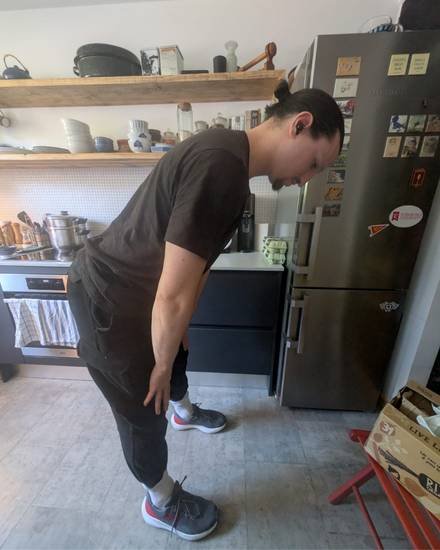
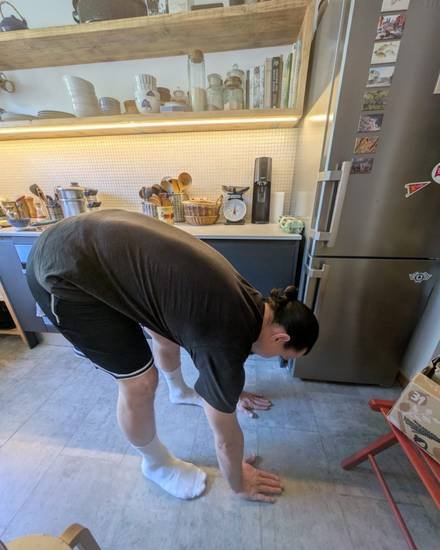
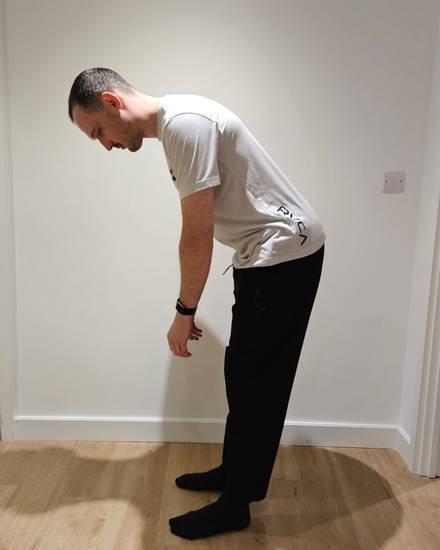
Guy before the programme, showing limited forward-bending range
Before
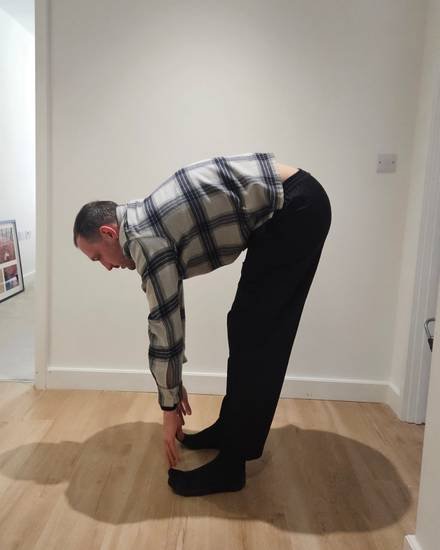
Guy after the programme, bending noticeably further forward
After

Back on the court, playing more than he had in years

Guy, 36. Property developer and basketball coach.

Years of back pain, and a different explanation from every physio and chiropractor he saw. The final straw was picking up his nephew: shooting pain in his back, and nerve pain down his right leg. The MRI showed a large L4/L5 disc bulge. He could not stand up straight, walk far, or sit for long. Four weeks in, the nerve pain had gone and he could walk with no pain at all. Four months in, he was back on the basketball court.

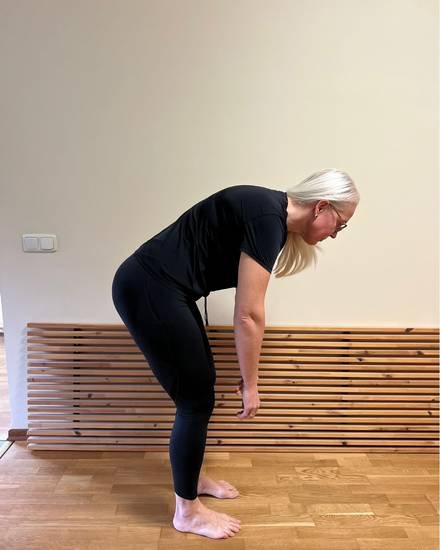
Katre before the programme, showing limited forward-bending range
Before
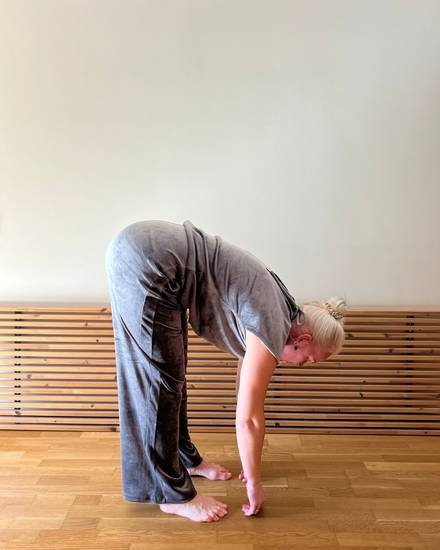
Katre after the programme, bending noticeably further forward
After

Travelling for work again, without planning around her back

Katre, 52. Business owner and accountant.

Four years with bulges at both L4/L5 and L5/S1, and a long list of treatments that helped for a while and then stopped. She was not getting worse. She was not getting better either, just managing the gaps between flare-ups. The final straw was a flare-up on a long flight to an important meeting. She came close to cancelling the rest of her diary. Alongside the programme we worked on her triggers, her flare-up patterns, and the fear that had built up around them. She broke a plateau she had been stuck on for years, and she travels for work again.

Forward-bending range is one visible marker, and it is the easiest one to photograph. It is not the only thing that changed for any of them, and it is not the thing we measure your programme against.

We've been where you are

Both of us blew out our L5/S1. We lost nearly two years each to it.

Jeremy Wade, HCPC Registered Physiotherapist

Jeremy Wade

HCPC Registered Physiotherapist · MSc Physiotherapy, Brunel University London · HBAHSc Athletic Therapy, Sheridan College

"Mine went playing basketball. I came down from a rebound, landed awkwardly, and that was it. I'm a physio. I knew what to do. It didn't matter. I still spent two years planning my life around my back."

Josh Midghall, Strength and Rehabilitation Coach

Josh Midghall

Strength & Rehabilitation Coach · MSc Physiotherapy, Brunel University London · HBAHSc Athletic Therapy, Sheridan College

"Mine went on a deadlift. One rep. After that I couldn't play sport, I cancelled on people constantly, and I felt like a burden to everyone around me. I didn't recognise myself."

Read more +Hide −

We tried everything on that list. All of it. Every time something helped we would get back to normal life, and every time, we would flare up again.

Basic rehab had done its job. It got us out of the worst of it and left us stranded in the middle. Too good to be in agony. Nowhere near ready for the lives we wanted.

Nobody could tell us how to cross that gap, so we went into the research and worked it out ourselves. How to load a back properly. When to push, when to ease off, and when a symptom mattered.

Then we used the same approach with our patients and got the same results. That is when it clicked. None of this needed hands-on treatment. It needed coaching, programming, education, and someone in your corner.

Jeremy plays basketball again. Josh deadlifts again. Neither of us plans our day around our back.

That is The BackForge.

Apply for coaching

How we close the gap

Three stages, in order. Each one makes the next one possible.

01Raise the thresholdRead more +Hide −

First we increase how much it takes to set your pain off. Not by avoiding things. By carefully adding what your back can already handle, so the line moves.

02Build confidenceRead more +Hide −

Then we go after the movements you have quietly stopped doing. The bend you avoid. The bag you will not pick up off the floor. The position you brace before you get into. We put them back one at a time, at a level you can handle today. Then we add to it. You do the thing. Nothing breaks. You do a bit more. Your body learns it, and so does your head.

03FortifyRead more +Hide −

Then we load it properly, until your back holds up to real life and real sport, with room to spare, so a bad night's sleep doesn't undo you.

Where you start
Where your life is
  1. Where you start
  2. Where your life is

The 12-week program

This is the shape of a typical twelve weeks. Yours will look different. We build it around your scan, your triggers, and what you want back.

You want an exercise programme that works for your back. That is what this is.

The difference is who is driving it. Anyone can send you exercises. You have probably got a sheet somewhere. The hard part is knowing which ones you are ready for, how much is enough, and what to change the week your back flares.

That is the job. That is what you are paying for.

  • A full assessment, written down and measured
  • A rehab plan built for you and your scan
  • Your exercise programming, adjusted every week
  • Weekly 1-to-1 coaching call
  • Support between sessions
  • Progressions when you're ready. Regressions when you're not.
  • Your triggers mapped, so you know what really sets it off
  • A flare-up plan, so a bad week doesn't cost you a month
  • Clear rules for when to push and when to back off
  • What your pain does and doesn't mean
  • A plan to get back to your sport
  • The knowledge to run this without us
  • Week 1We find your line

    A full assessment. What your back handles now. What sets it off. What you want back. We write the numbers down, because we measure them again in week 12.

  • Weeks 2–4Calm and raise

    We settle the symptoms and start raising your limit. You start spotting your own patterns too. What really provokes it. What you had been blaming that never did.

  • Weeks 5–8Build and test

    Real loading. You bend and lift on purpose, and find out it is fine. You will probably flare at some point. Good. That is the week you learn to handle one instead of fearing the next.

  • Weeks 9–12Back to your life

    We rebuild the things you stopped doing. The sport. The lifting. The flight. The piggyback. We measure you against week 1. Then we hand you the controls, so you can keep going without us.

The exercises get you there. Knowing why they worked is what keeps you there.

Who this is for

This is for you if

  • You have an L4/L5 or L5/S1 disc bulge, diagnosed or strongly suspected.
  • You've had symptoms for months or years, not days.
  • You've already tried the usual things and they didn't hold.
  • You want to lift, travel, play sport and pick up your kids again.
  • You're willing to put in 2–3 hours a week.

This isn't for you if

  • You want something done to you rather than with you.
  • You're looking for a passive fix: a machine, a gadget, a magic stretch.
  • You aren't willing to train, even lightly, to begin with.
  • You have red-flag symptoms. Those need a doctor first, not a coach.

Not the right time to apply? Start with the free Disc Bulge Guide

What we are, and what we're not

Your programme is led by a HCPC registered physiotherapist. That means regulated, insured and accountable. It also means we are clear about what we do not do.

  • Jeremy Wade. HCPC Registered Physiotherapist
  • Josh Midghall. Strength Coach
  • Both: MSc Physiotherapy, Brunel University London
  • Both: HBAHSc Athletic Therapy, Sheridan College, Canada

We don't diagnose over the internet. We don't replace your GP or your consultant. And we don't treat red flags. If you have any of the symptoms below, we'll tell you to see a doctor, not sell you a program.

If the call shows we're not the right people for you, we'll say so and point you somewhere better. That happens, and it's fine.

See a doctor today if you have:

  • Loss of control of your bladder or bowels
  • Numbness around your groin, buttocks or inner thighs
  • Weakness in a leg that is getting worse
  • Numbness or weakness in both legs
  • Unexplained weight loss, or a fever alongside your back pain

These are rare, but they need urgent medical assessment, not coaching, and not a wait-and-see.

Our guarantee

If you don't get better, you don't pay.

  1. 01
    Week 1: we measure you.Your assessment gives us a written starting point.
  2. 02
    Week 12: we measure you again.Same tests. Same numbers. You see both.
  3. 03
    No clear improvement? You get every penny back.No questions asked. No forms. No argument.

You have already paid for things that did not work. You should not have to carry that risk a third time.

Questions people ask us

About your back

Can a disc bulge actually heal?

Yes, and more often than most people are told. Across the research, around two thirds of lumbar disc herniations shrink back down on their own without surgery.

The hard part isn't the healing. It's getting back to a full life without setting yourself back on the way. That's the part we coach.

Zhong et al., 2017. Meta-analysis of 11 studies. Pooled resorption rate 66.7%.

My MRI looks bad. Does that mean my case is severe?

Not on its own. Scan findings and pain match up far less than people assume. Half of 40-year-olds with no pain whatsoever have a disc bulge sitting on their spine right now.

Your report describes what your spine looks like. It doesn't tell you what you'll be able to do in six months.

Is it really safe for me to bend and lift?

For almost everyone, yes, and avoiding it usually makes things worse over time, because your back gets less able to cope, not more.

The real question isn't whether to bend or lift. It's how much your back is ready for today, and how we move that number up week by week. That's the whole job.

I've had this for three years. Am I too late?

No. Most people we work with have had this for years, not months. That's the normal starting point here, not a lost cause.

Long-standing pain usually means the back has been protected for a long time. That's very workable. It's not the same as damage getting worse.

Whether we're right for you

Can this really work online, with no hands-on treatment?

Yes, and it's worth saying why, because it's the question we get most.

Hands-on work feels good and can settle things down. What it doesn't do is build capacity. What builds capacity is loading your back gradually, coaching you through it, and knowing when to push and when to back off.

All three of those work perfectly well over video. What matters is who's watching and what they tell you to do next.

I've already done physio. How is this any different?

Physio got you out of the worst of it. That's what it's for, and it worked.

What it rarely does is take you the rest of the way, from "manageable" to deadlifting, playing sport and flying long haul without a second thought.

The difference is not a better list of exercises. It is the right exercise at the right time, every week, decided by someone who knows your back. That gap is where we start, and it's all we do.

I've already had surgery. Can you still help?

Often, yes. A lot of people come to us after surgery, when the pain has gone but the confidence hasn't.

How soon we can start, and whether we want sign-off from your surgeon first, depends on the operation you had and how long ago it was. That is one of the things we go through on the call.

The practical side

How much does it cost?

Packages start from £799 (about $1,099).

What yours comes to depends on what your programme needs, which is one of the things the discovery call is for. There is no cost and no obligation to have that conversation.

Whatever the figure, the guarantee applies: we measure you in week 1, measure you again in week 12, and if there is no clear improvement you get every penny back.

How much time does it take, and do I need a gym?

Two to three hours a week, including your coaching call.

You can do this with virtually no equipment. We do recommend gym access if you can get it. You'll get further, faster, because we can load you properly in the back half of the program.

What if I flare up during the 12 weeks?

You probably will at some point, and that's planned for. Flare-ups are part of this, not a sign it's failing.

This is exactly what having a coach is for. When it happens we adjust the plan that week, work out what set it off, and keep going. A PDF of exercises can't do that. It's the single biggest reason people stall on their own.

What actually happens after I apply?

You get an answer straight away, at the end of the form.

If it looks like we can help, we'll get a call in the diary within 24 hours. It's 30 to 45 minutes, and it's a proper conversation about your back, not a sales pitch. We'll ask about your scan, what you've tried, and what you want to get back to.

If we're not the right people for you, we'll tell you at the end of the form and point you somewhere better. We'd rather be honest than take your money. There's no cost and no obligation either way.

Stop planning your life around your back.

Rebuild confidence in your back and get back to doing the things you love.

Apply for coaching
Apply for coaching